

Multi-factor authentication
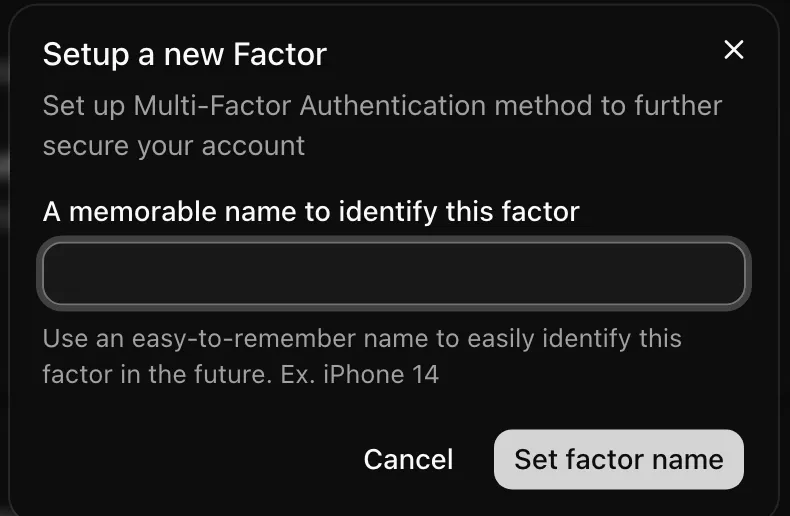
Users enroll an authenticator app and are challenged for a code at sign-in.
The pages live in the (marketing) route group of the Next.js app, share one layout with the header and footer, and render at the root of your domain.
/Hero, feature sections, and calls to action built from Server Components and Tailwind CSS 4.
/pricingRendered from the same billing configuration the checkout uses, so plans on the page match plans in Stripe or Lemon Squeezy.
/blogPost listing and post pages with categories and tags, fed by the CMS layer.
/docsHierarchical docs with parent and child pages and ordering, for product help or a public API reference.
/changelogRelease notes as a content collection, next to the blog and docs.
/contactA contact page whose form sends email through the mailer you configure for the app.
/faqA FAQ page you edit in code alongside the rest of the site.
/terms-of-serviceTerms of Service, Privacy Policy, and Cookie Policy pages in their own route group.
Blog posts, docs, and changelog entries go through one CMS interface. The default is Keystatic with local Markdoc files, so content is versioned in Git with your code and needs no configuration. Set CMS_CLIENT to wordpress to read from an existing WordPress site, or install the Supabase CMS plugin to keep content in Postgres.
Because pages call the interface, not the provider, switching CMS does not mean rewriting your data fetching. Sanity, Contentful, or Strapi need a custom client that implements the same interface; the docs walk through writing one.
/sitemap.xml that adds blog posts and docs pages automatically, plus robots configuration.Keyword research, writing, and links are still your job. The kit removes the setup, not the work.
The website is the front door to a SaaS. Sign-up, billing, team accounts, and the admin panel sit next to your pages from day one, in the Next.js SaaS starter kit.
For a brochure site or a blog with no accounts, a plain Next.js template is lighter and cheaper.
Already have a site on Framer, Webflow, or WordPress? The kit documents how to keep an external marketing website and serve only the app from MakerKit. Details for the built-in pages are in the marketing pages docs and the SEO configuration guide.
Inside MakerKit
> Add a projects table scoped to team accounts
Context your harness loads
Root rules first, then the folder the agent works in
Products built on MakerKit
 AmplefoundAI-organic growth agent
 GondlaThe first content engine designed for Hybrid Search Visibility
 ConvoQualitative Research At Scale
 QA.techShip faster with AI agents that create and run your QA tests
 ReplybossFind relevant posts on X. Grow faster and sell more.
 ReplenoInventory management for craft & small businesses
The marketing site lives in the same Next.js app as the signed-in product. Blog and docs content come from Keystatic, WordPress, or Supabase through one CMS interface. Need a brochure site with no accounts? A plain Next.js template is lighter.
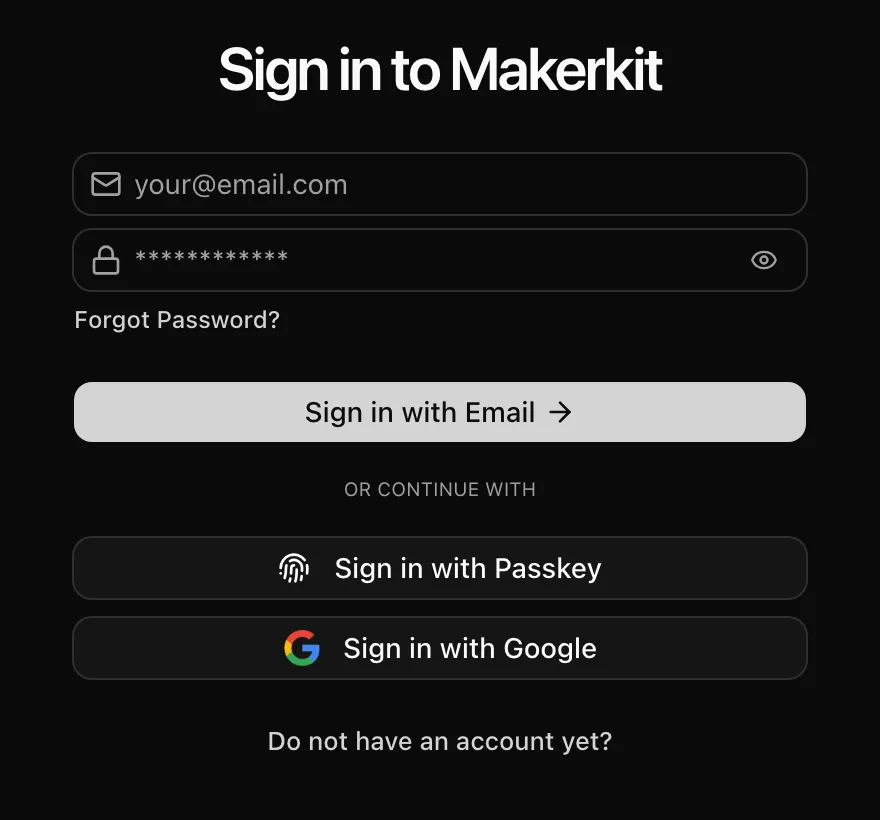
Password, magic link, passkeys, OAuth and multi-factor authentication, with the emails that go with them.
Users enroll an authenticator app and are challenged for a code at sign-in.
Templates written in JSX with React Email, sent through Resend or Nodemailer (SMTP).
Password, magic link and social sign-in, configured per environment.
Opt-in sign-in with Face ID, Touch ID, Windows Hello or a security key. No password to phish.
Passwordless sign-in: users get a one-time link by email instead of typing a password.
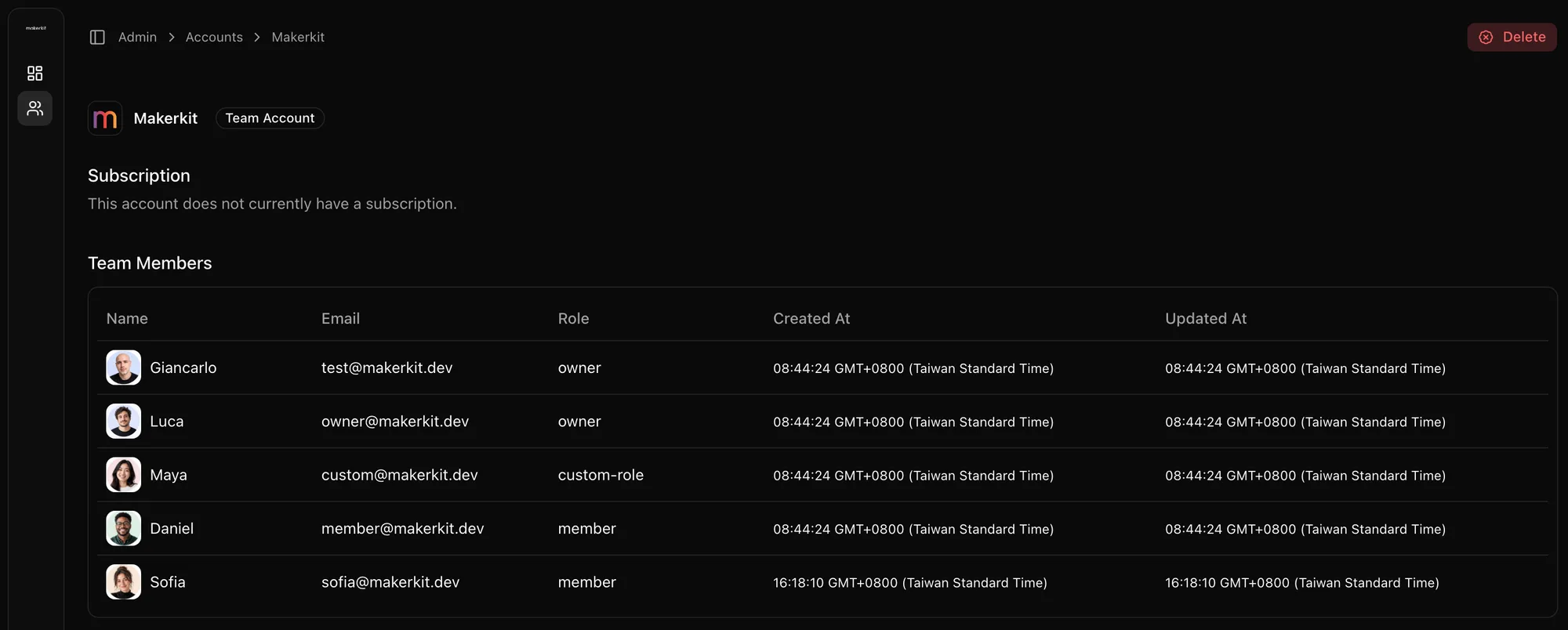
The multi-tenant SaaS boilerplate parts: auth, billing, teams with roles, and a super admin that can impersonate or ban users and teams, plus the screens your customers use to manage them.
Roles map to permissions that your code and your database policies both check.
Users change plans, update payment methods and download invoices without a support ticket.
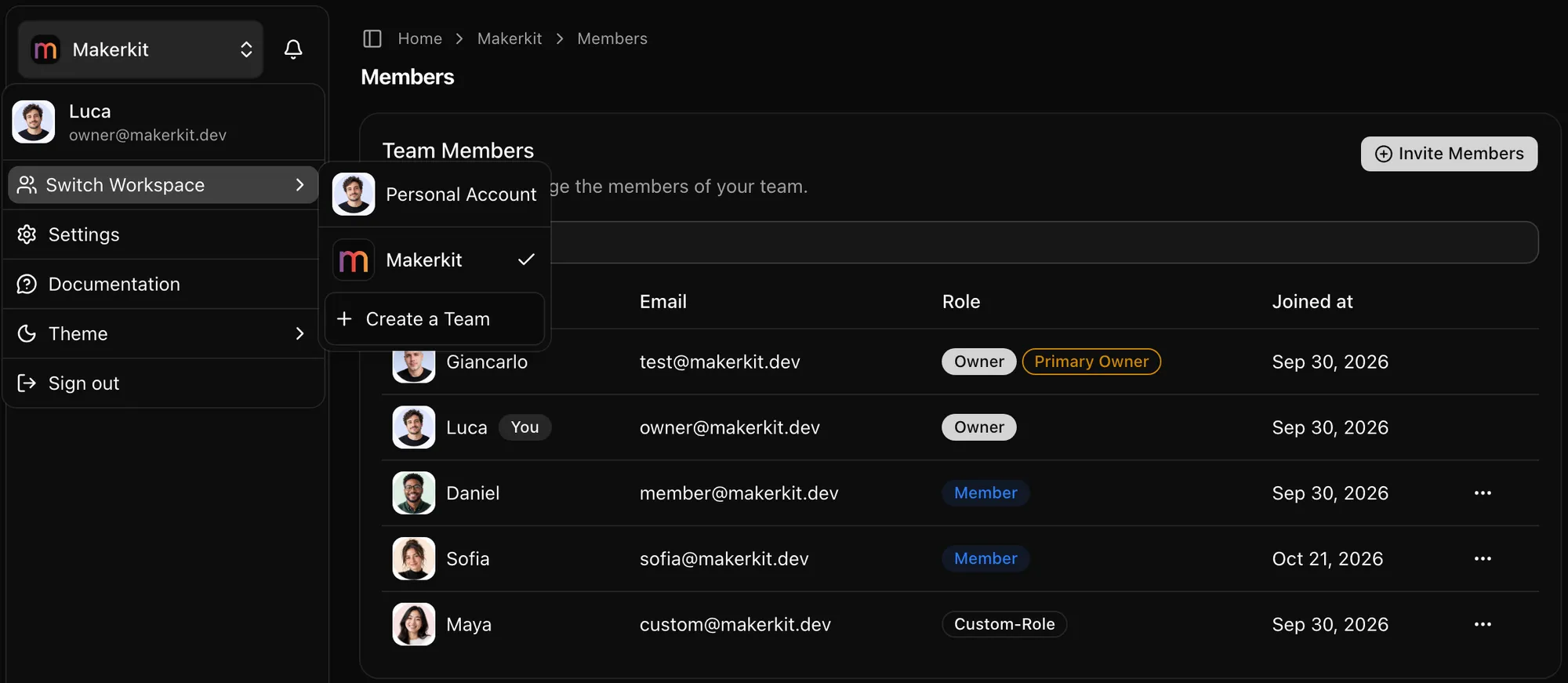
Users belong to several teams and switch between them, or work in their personal account.
Flat, per-seat and metered subscriptions through Stripe Checkout, with webhooks that keep plans and seats in sync with your database.
Billing, email, CMS and monitoring sit behind interfaces, so changing provider is configuration, not a rewrite.
Every UI string comes from translation files, so adding a language is content work.
Rules, an MCP server and strict checks keep generated code in the kit’s patterns.
AGENTS.md files at the root and in each package teach coding agents the kit’s conventions.
Strict TypeScript and linting across the monorepo, so type errors surface before your users find them.
Gives Claude Code, Cursor, Codex and Gemini structured access to the kit: database, components, translations, checks and PRDs.
Tests for authentication, team accounts and invitations, written with page objects you can extend.
The full source lives in your repository. Nothing is hidden behind a package you cannot edit.
The parts nobody lists until they are missing: content, deployment, documentation, and people to ask when you get stuck.
The setup, stack, and tooling are decided, so your first commit is a product feature.
Clone the repository, install dependencies, and start the dev server: the full SaaS runs locally, not a demo shell.
Built on Next.js 16 or TanStack Start, with React 19, Zod 4, Shadcn UI, Tailwind CSS 4, and TypeScript 7 (Go). Upgrades land through the public changelog.
Strict TypeScript, Oxlint, and oxfmt configured across the monorepo. The Rust-based Oxc toolchain keeps lint and format feedback fast as the codebase grows.
Password, magic link, passkey, and social sign-in, plus MFA, with the email flows that go with them.
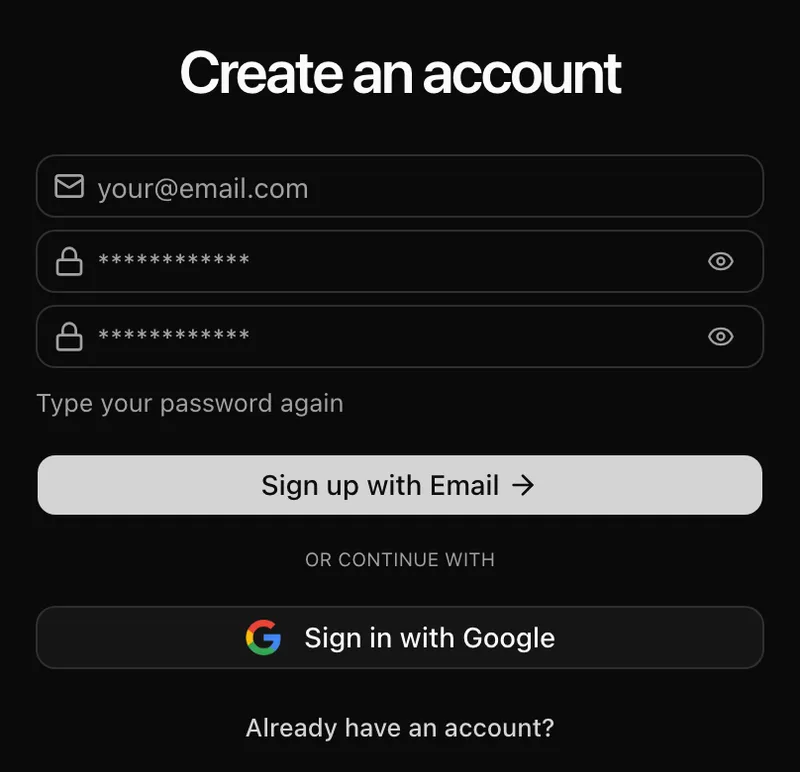
Secure email/password authentication with built-in password reset, email verification, and account recovery flows.
Passwordless sign-in: users click a link in their inbox and skip the password entirely.
WebAuthn passkeys: users sign in with Face ID, Touch ID, Windows Hello, or a hardware security key. Phishing-resistant, with nothing to reset.
Google, GitHub, Facebook, X, Discord, and many more OAuth providers ready to configure.
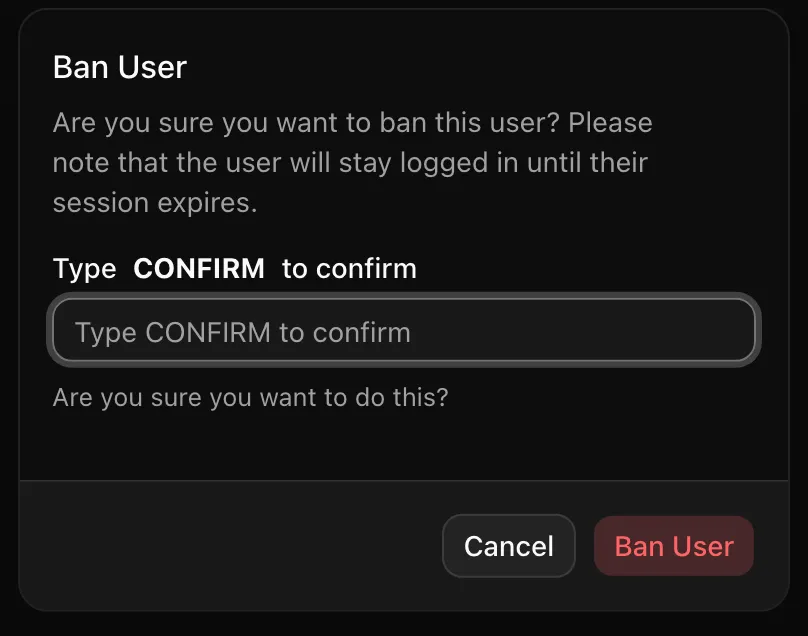
TOTP-based MFA to protect your users' accounts, with enrollment and challenge screens included.
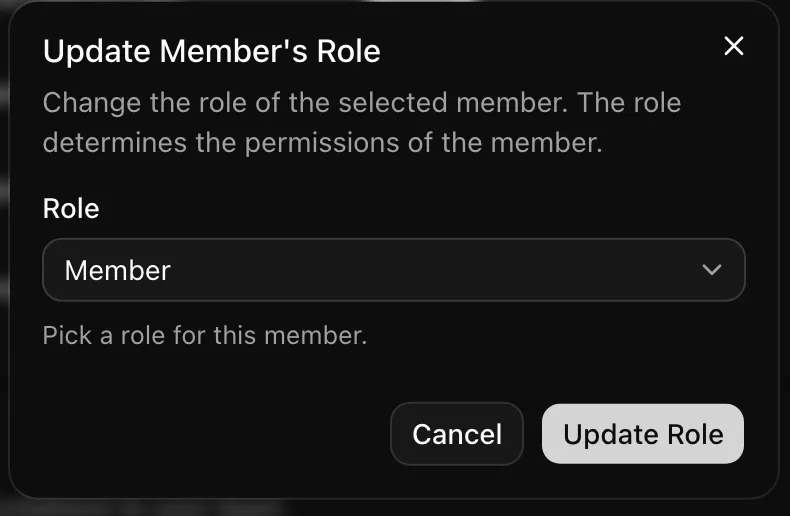
Personal and team accounts, invitations, and role-based access control, modeled in the database rather than bolted on in app code.
Full B2B multi-tenancy support. Let customers create workspaces, manage teams, and collaborate securely.
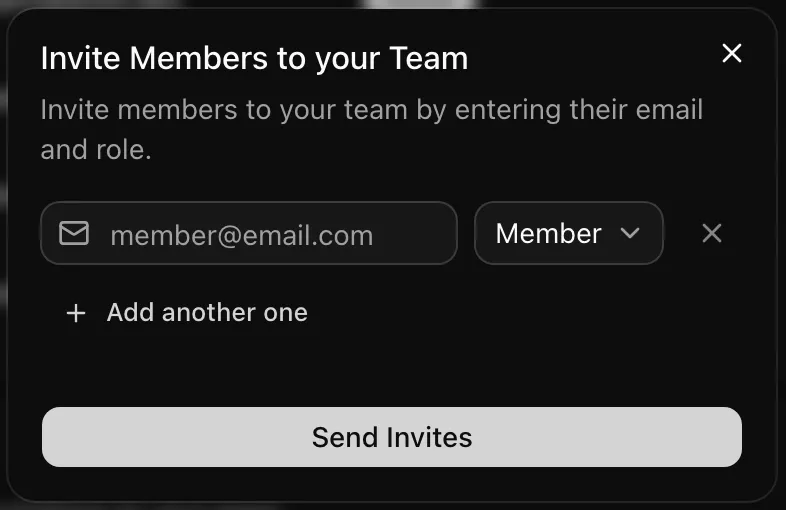
Email-based invitation system with role assignment. Onboard team members with a single link.
Granular role-based access control (RBAC). Define custom roles and permissions that match your product's needs.
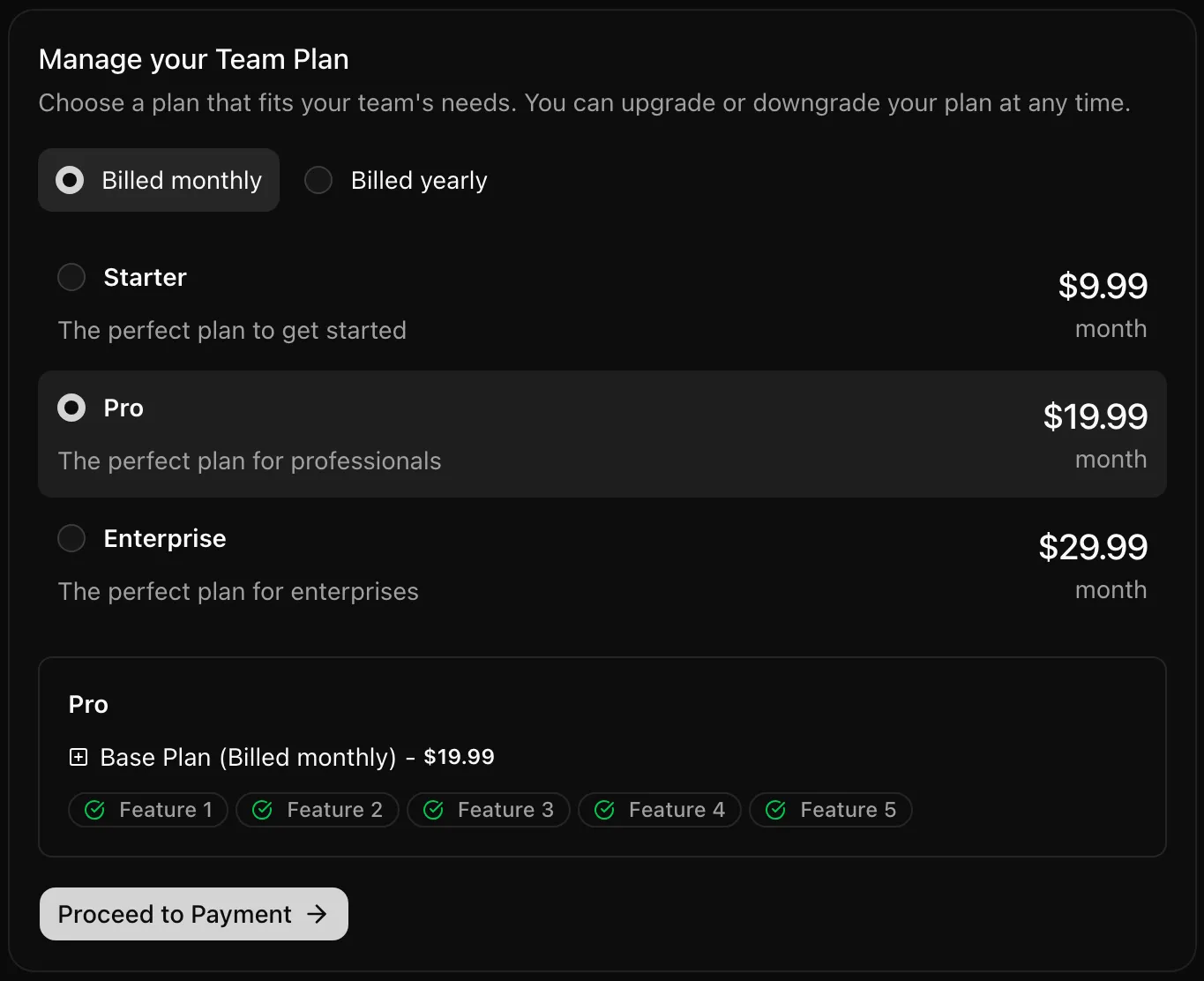
Subscriptions with Stripe and other providers, including per-seat and metered billing, for personal and team accounts.
Stripe Checkout handles cards, Apple Pay, Google Pay, and other payment methods.
Self-service subscription management. Customers update payment methods, view invoices, and cancel without opening a support ticket.
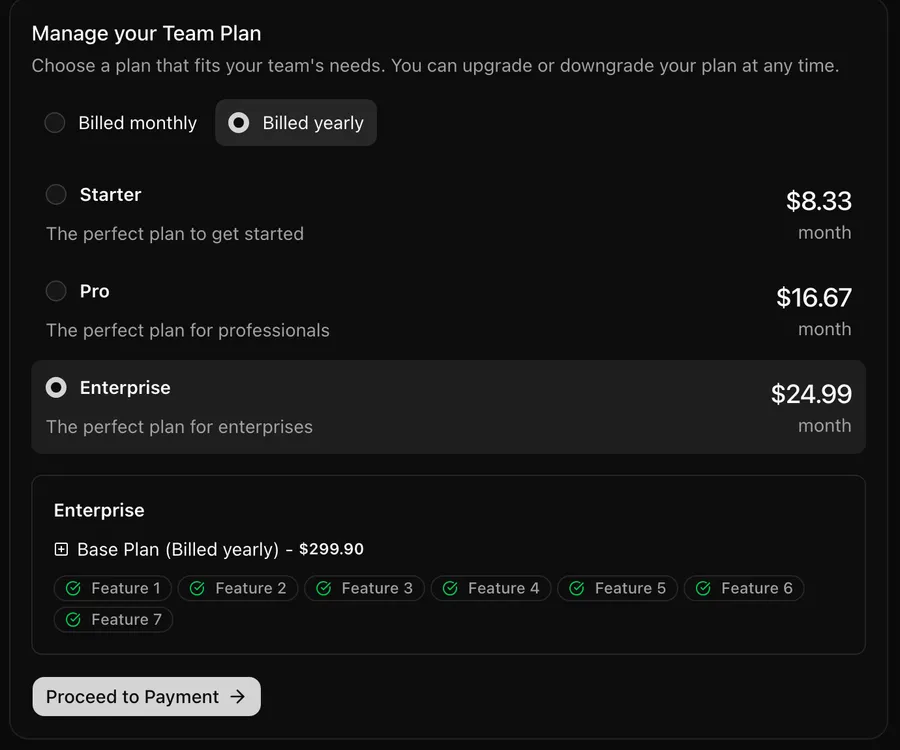
Per-seat, usage-based, flat-rate subscriptions, or one-time purchases. Plans live in one billing schema that checkout and the pricing table both read.
Manage your users, organizations, and build your own internal tooling within the app.
See users, organizations, and subscriptions in one dashboard, restricted to super admins.
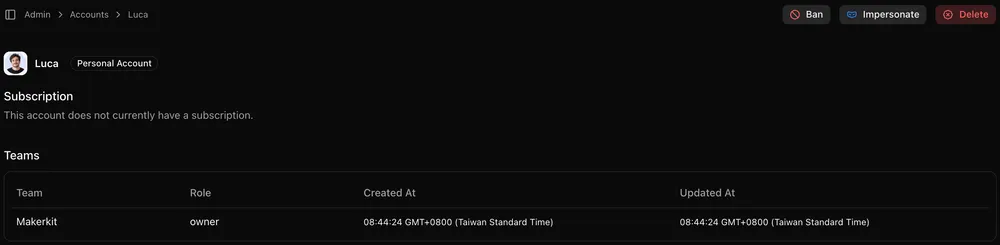
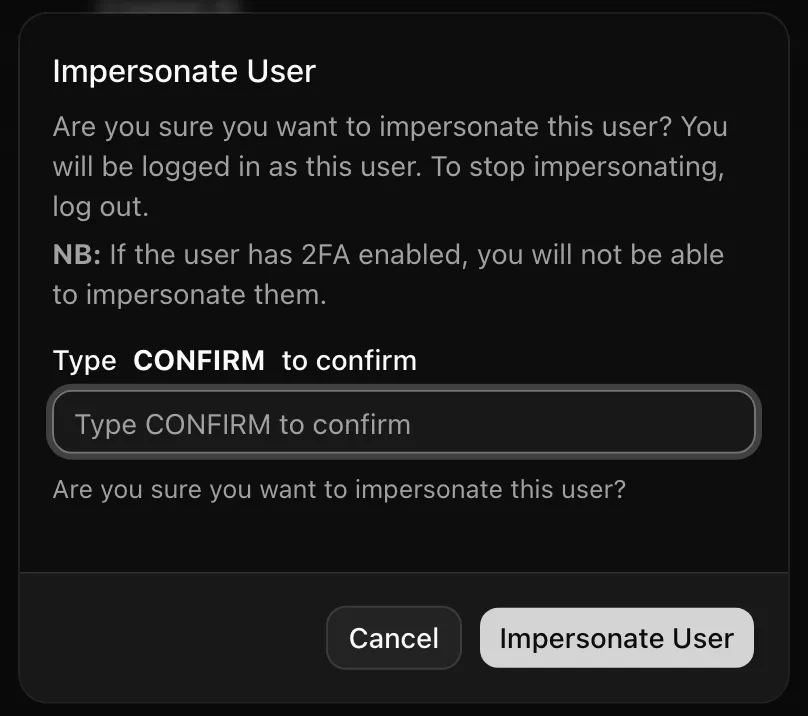
Explore, impersonate users, ban/delete accounts, all without touching the database.
Screens for every flow, built from the same Shadcn UI components you will use for your own features.
A landing page template with hero, features, pricing, and call-to-action sections to adapt to your product.
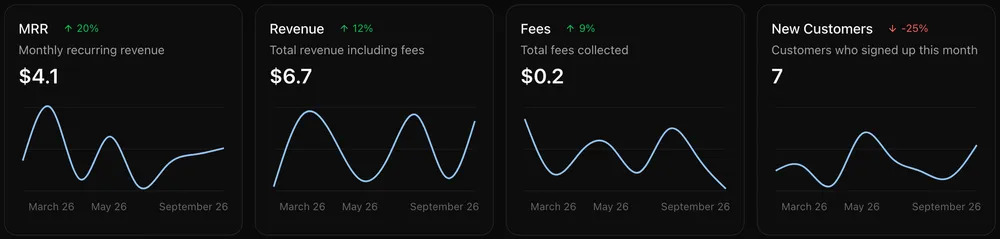
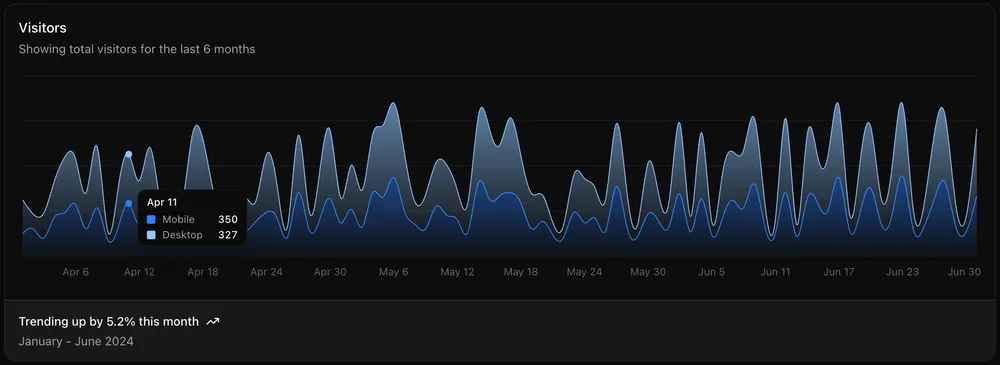
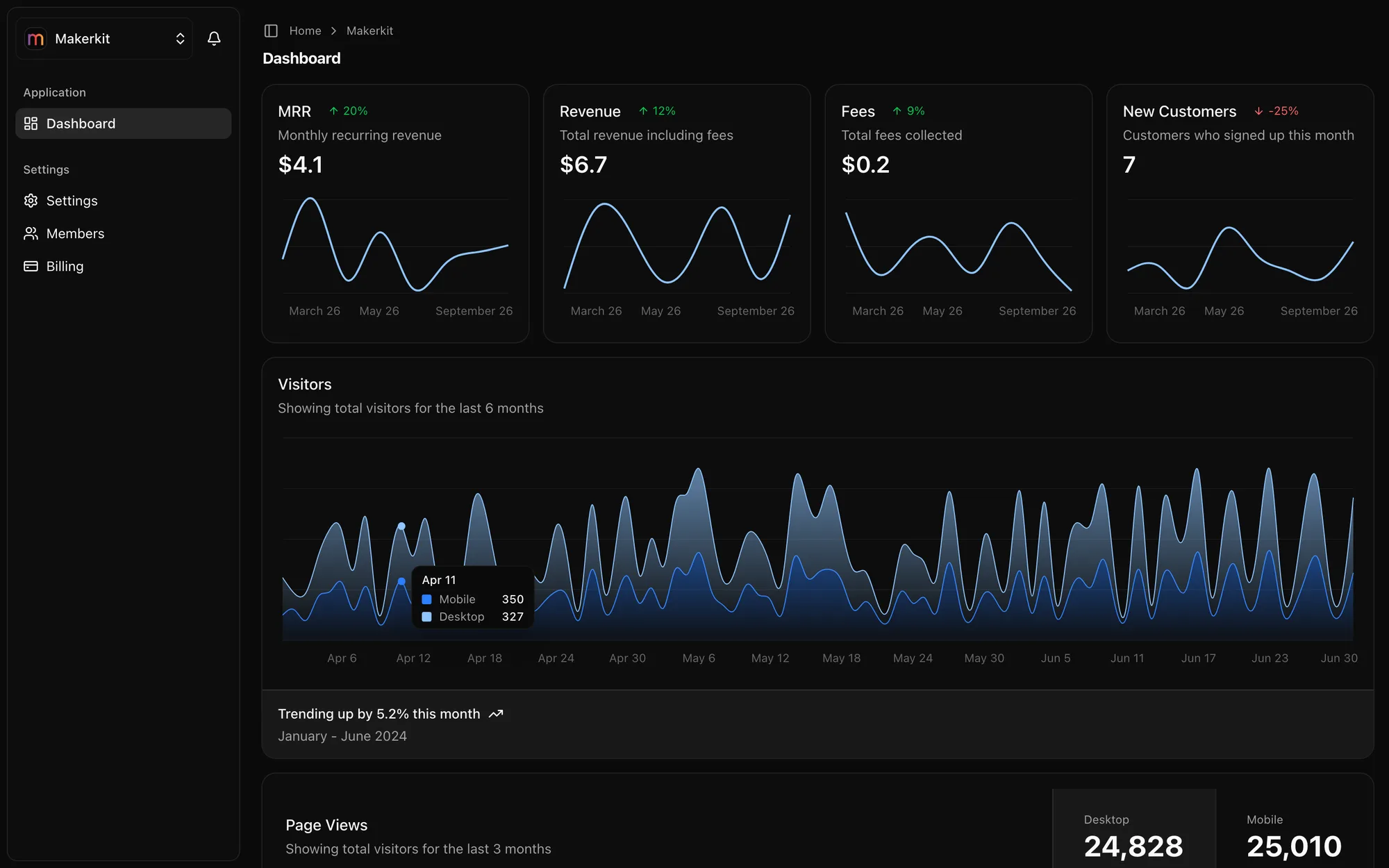
Dashboard demo components with charts, ready to wire to your own data.
Every Shadcn UI component pre-installed and themed. Browse, copy, and customize from our built-in dev tools.
A pricing table generated from your billing config: change a price in one place and the page follows.
Get found by your target audience with blog, documentation, changelog, and more.
A blog for product updates and SEO content, with per-post metadata and sitemap entries.
Reduce support load and improve user onboarding with the built-in documentation. Educate users and drive traffic to your product.
Keep users engaged with product updates. Announce features, fixes, and improvements in a dedicated changelog.
Comprehensive monitoring and testing tools to help you keep your SaaS running smoothly.
Pre-configured end-to-end tests for critical user flows. Ship with confidence, catch regressions before your users do.
Plug-and-play support for Sentry, PostHog, Signoz, and more. Monitor errors, track analytics, and debug production issues.
Ask me and the MakerKit community on Discord about setup, kit-related issues, and how the codebase fits together.
Developers and founders on the kits, the docs and the support. Every quote links to the original post.
just wanna say thanks to @gc_psk for building @makerkit_dev . it is such an overpowered template. like finally we have a really good one with active development, good docs and now even cursorrules/windsurfrules to just sit down and see ai agents do the stuff. truly mindblowing.

Built and maintained full-time by Giancarlo, a software engineer with almost 15 years of experience at startups and enterprises. Support questions reach me directly.
My favorite so far is @gc_psk and @makerkit_dev ship cursor rules along with updates to the framework. That's been really useful to pull in new version (via git remote) and things stay in sync.
Just started using MakerKit and it's a total game-changer. 🚀 Wish I had this when I was building Phishr. Instant team management and billing? Insane.
Second that! Giancarlo provides amazing support!! 😄
You need to check @makerkit_dev by @gc_psk — it’s the best I’ve seen so far. It’s feature complete, plenty examples, amazing docs, great Discord community, the dude provides support even days after his weeding (which is crazy!) I’m not affiliated in every way, just a happy cx.
Honestly @makerkit_dev is great. More for B2B products but really clean and well documented.
Amazing! @gc_psk has built a masterpiece with this one!
I just stumbled upon @makerkit_dev (and you!), it's impressive, I thought it was a big team behind how many features I saw (and I've been working in software a long time!) I was just looking for a free boilerplate, but the lifetime licence makes it a no brainer. Thank you!
I would have totally agreed with you until… I found @makerkit_dev last year. This is by far, the best boilerplate I found those past years. The dev is pushing new features and updates almost every week. His documentation (specially migrating to Next 15) is the best I’ve seen.
Makerkit is a gem for makers, if I was not building a desktop app I would be using it for sure, maybe for my next project
I landed on MakerKit after getting into boilerplates with ShipFast. Much better.
1000% recommend buying a good boilerplate (or making your own) I use @makerkit_dev it's so good I had an affiliate link, but I can't find it at the moment
For anyone who wants to build their own SaaS, I recommend trying out @makerkit_dev. Thanks to @gc_psk for creating such a fantastic tool that makes building websites a breeze! #SaaS #buildinpublic
We loved the product since when Giancarlo released the first version, and are building upon it ever since for all of our products. Highly recommended for all indie makers out there.
Solid and battle tested boilerplate with an amazing community and support.
Marketing pages take a few hours. The product behind them, with accounts and payments, is the part a website template leaves to you. With AI coding tools, that is still 49-81 hours of senior developer time, including fixing the patterns AI got wrong.
Hours with Claude Code or Cursor · bar shows the range on a 0–25h scale
Estimates for a senior developer building from scratch with Claude Code or Cursor at $150/hour, including 15-25 hours refactoring AI-generated patterns. Read the methodology
Choose it only if the website is the front door to a SaaS. For a site with no product, a free template is the better deal.
The MakerKit Next.js website is the marketing site inside the MakerKit Next.js SaaS kit: landing page, pricing, FAQ, blog, documentation, changelog, and legal pages, in the same app as authentication, billing, and team accounts. Blog and docs content come from Keystatic, WordPress, or Supabase through one CMS interface.
Landing page, pricing, FAQ, blog, docs, changelog, contact, and legal pages, already routed and styled.
Keystatic, WordPress, or Supabase behind the same API, or your own client for Sanity, Contentful, or Strapi.
Per-page metadata, a sitemap route, and a documented JSON-LD pattern for marketing pages.
Sign-in, billing, and teams live in the same Next.js app, so the pricing page links to a real checkout.
AGENTS.md and CLAUDE.md files at the root and in each package, rules for Claude Code, Cursor, Codex, and Gemini, and an MCP server your agent can call.
Pay once, then pull new features, fixes, and framework upgrades into your repository with git. Maintained full-time since 2022.
Without MakerKit: A website template ends at the pricing page
With MakerKit: The pricing page leads to a working checkout
Without MakerKit: Blog content locked to one CMS
With MakerKit: Swap Keystatic, WordPress, or Supabase without rewrites
Without MakerKit: Separate repos for site and app drift apart
With MakerKit: One design system, one deploy, one codebase
One-time purchase: lifetime license, continuous updates, unlimited projects of your own.
Questions about licensing?
Read the MakerKit license terms and the MakerKit FAQ, or contact me.
Not covered here? Ask in Discord or contact me. Licensing details are in the MakerKit license terms.
No. It is the marketing site that ships inside the MakerKit Next.js SaaS kit: landing page, pricing, FAQ, blog, documentation, changelog, contact form, and legal pages, in the same Next.js app as the signed-in product. If you want a website with no accounts or billing, a free Next.js template is the better fit.
From a CMS interface with three built-in implementations: Keystatic (local files or GitHub), WordPress, and Supabase. You can switch between them without rewriting data fetching, or write your own client for Sanity, Contentful, or Strapi.
Per-page metadata, a sitemap route, and a documented pattern for JSON-LD structured data on marketing pages. Keyword research, content, and backlinks are still your job.
Yes. The kit documents a proxy configuration that sends marketing routes to an external website while MakerKit serves the application.
Only buy it if the website is the front door to a product. Then auth, billing, and teams sit next to your pages from day one, and the site and app share one design system and one deploy. If the site will stay a brochure, do not buy MakerKit.
A one-time purchase. You get a lifetime license to the source code, continuous updates for the stack you bought, and unlimited projects for your own business, with no renewal fee. Building products for clients requires a Team license, and each client that receives the code needs their own license.
Discord support from me, Giancarlo, the founder who works on MakerKit full-time, and from the community. I help with setup, kit-related issues, and questions about the codebase. Team licenses add a private Discord channel for your team.
You get the Next.js website and the product behind it in one codebase: pricing page, checkout, accounts, and teams. Buy it when the site is the front door to an app.
Read the Next.js kit docs